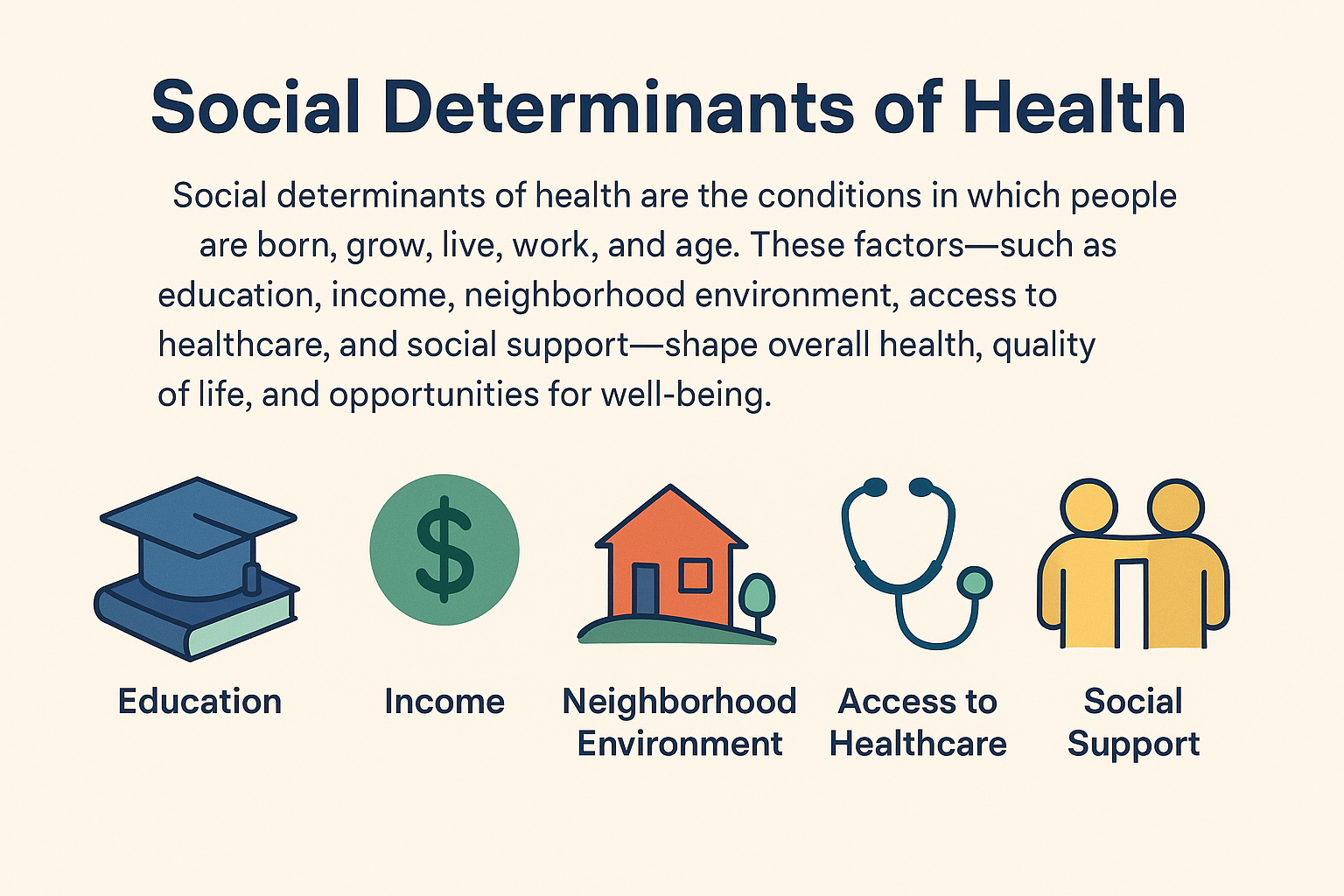
The Social Determinants of Health
The World Health Organization (WHO) defines the social determinants of health as the conditions in which people are born, grow, live, work, and age—as well as the broader systems and structures that shape those conditions. In essence, these are the social and environmental factors that influence our daily lives. They are shaped by elements such as income, education, race, gender, and access to resources like healthcare and housing. Together, these factors play a powerful role in shaping the overall health and well-being of individuals, families, and communities. For example, research shows that African American communities experience higher rates of chronic conditions such as high blood pressure at younger ages, in part due to inequities in healthcare access and other long-standing social and economic factors (CDC, 2021). Social determinants of health extend beyond physical health—they also affect mental health and risk for substance use. Factors such as limited access to quality housing, education, and employment can influence opportunities throughout life. When these challenges persist, they can contribute to cycles of poverty and disadvantage that impact both individual and community health over generations.
Get your free download now